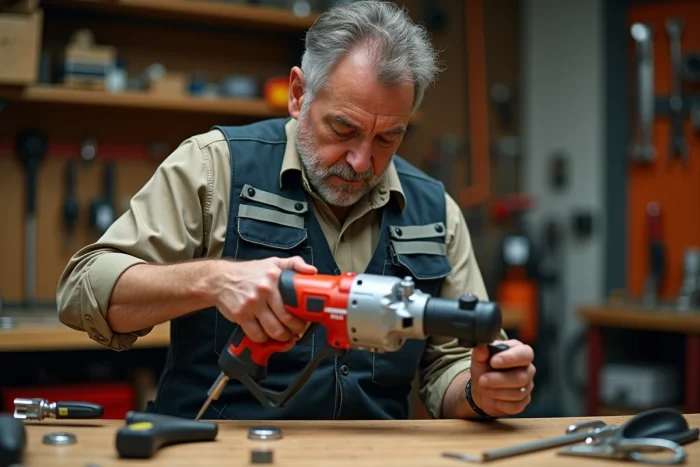
Ignoring the manufacturer’s recommendations can lead to a noticeable loss of performance in power tools, even with occasional use. Using an inappropriate oil, sometimes seen as a cost-effective alternative, promotes premature wear of internal components.
Chemical compatibility between the oil and the mechanism materials is often overlooked, yet it is crucial for the longevity of the device. Some generic oils, although reputed to be versatile, compromise the sealing or specific lubrication required by Hilti rotary hammers.
Why the right oil makes all the difference for your Hilti rotary hammer
Thinking of maintaining a Hilti rotary hammer solely in terms of the drill bit or a simple dusting misses the critical point: internal lubrication. Without perfectly compatible oil, parts rub against each other, heat builds up, and performance quickly deteriorates. Using a basic lubricant means accepting that your device will age too quickly, heat up more, and fail where it should withstand the pressure.
Choosing truly suitable oil is the safest way to avoid these issues. Especially when making the effort to choose oil for Hilti rotary hammers, one knows that the mechanical parts are enveloped in a real shield: reduced friction, preserved original adjustments, and limited residue formation. The change is noticeable: the drill bit bores through concrete without slowing down, the motor lasts longer, and the power does not weaken.
Several benefits clearly stand out with recommended oil:
- Extend the life of the rotary hammer thanks to increased resistance to pressure and repeated cycles.
- Maintain drilling capacity, even during demanding sequences, without a drop in performance.
- Protect the entire assembly, including the drill bit and internal parts, from corrosion and clogging.
Ultimately, lubrication is never a detail. The attention given to the choice of lubricant determines the consistency, power, and reliability of the tool, operation after operation, on all bricks, all concretes, wherever endurance is required.
How to recognize the best oil: criteria and reliable indicators
Finding the right oil for your Hilti rotary hammer requires much more than a quick glance at the first label you see. It is primarily about prioritizing a formula designed for the unique demands of power tools: high pressure, repeated heating, sustained rhythm. The ideal oil limits friction, withstands temperature increases, and protects every moving component, from the drill bit to the piston.
The device manual remains the most reliable source: the manufacturer always specifies the type or range of lubricants to use. Following these recommendations eliminates any risk of incompatibility and extends the life of your rotary hammer, even when used on very hard or abrasive materials.
The criteria that really matter for choosing oil
Before selecting a lubricant, it is better to check several elements:
- Its viscosity: a good oil maintains the same fluidity even under high temperatures and spreads wherever needed.
- Thermal stability: protection must remain stable, even during long sequences of use.
- Rust prevention: the oil must prevent oxidation of metal parts, whether it’s the drill bit or internal mechanisms.
- Compatibility with all parts of the tool, especially seals and sensitive surfaces.
Products specifically developed for rotary hammers are tested in the field. By adopting them, maintenance becomes simpler and the risk of breakdown is minimized. Storing in a dry place, away from dust, further ensures the effectiveness of lubrication during periods of non-use.

Frequency, key actions, and warning signs: keeping your rotary hammer at its best
The question of lubrication depends on both the frequency of use and the type of work. A heavily used model should be lubricated every 10 to 15 hours of operation. For less frequent use, it is better to grease systematically before a work session. A quick look at the manual allows for adjusting this tempo for each specific model.
Some actions should become reflexes: clean the area of the chuck and drill bit before any application of oil, use only compliant oil, and apply a thin layer to exposed mechanical parts. Avoid excess to prevent attracting dust, and replace the dust cover to limit the intrusion of abrasive debris.
Recognizing signs that should alert you
The following symptoms indicate that maintenance needs to be reviewed:
- Decreased drilling performance or the tool overheating quickly: lubrication or oil quality is insufficient.
- Metallic noises, squeaking: often indicative of weak lubrication.
- Appearance of metallic particles in the lubricated area: the tool must be stopped immediately, checked, and re-greased to avoid rapid wear.
Regularity and quality of lubrication are two pillars: any rotary hammer kept in a dry place, away from moisture and dust, remains reliable and available at a moment’s notice. Careful maintenance ensures a ready and operational device, job after job, without unpleasant surprises or unexpected interruptions.