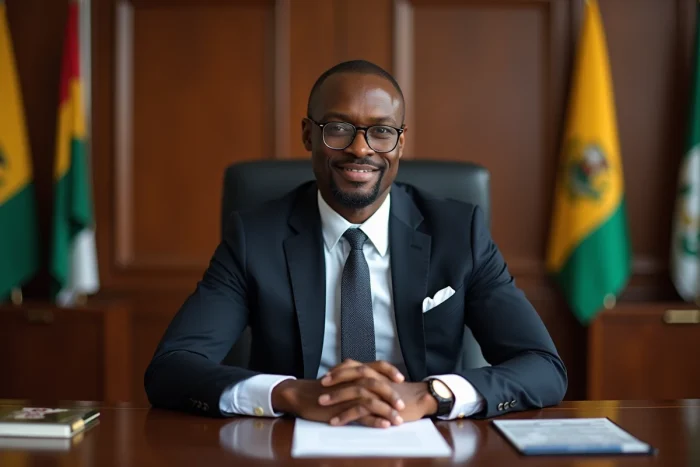
A seemingly mundane figure, 220,000 dollars per year, marks the boundary between discreet power and continental stakes. Behind the closed doors of the Executive Council, the salary of the president of the African Union is set far from the spotlight. Here, there is no public grid, few leaks: the rule is silence, where other international institutions clearly display their scales.
The salary of the president of the African Union: key figures and institutional framework
The African Union Commission, based in Addis Ababa, plays a central role in the daily functioning of the continent. This structure, a true organizational pillar, is led by the chairperson of the Commission, currently Moussa Faki Mahamat. To access this position, it is not enough to have connections: one must convince the member states, gathered at a summit, during a vote that is as strategic as it is political. The term is four years, renewable once, and directs the trajectory of the Union for years.
When it comes to money, the issue takes a peculiar turn. The topic of the salary of the chairperson of the Commission does not fill official statements. Yet, the information circulates: the gross annual salary amounts to 220,000 dollars. Once taxes, social contributions, and internal deductions are subtracted, the holder is left with a net income that fluctuates between 100,000 and 120,000 dollars per year, depending on the current tax situation. This amount, derived from contributions from the member states, summarizes the pure remuneration.
But holding this position also means benefiting from concrete advantages, designed to ensure the independence and security of the role. Here are the privileges that accompany this position:
- provision of an official residence in Addis Ababa, with all necessary household staff
- presence of a security team available 24/7
- full coverage of medical expenses
- specific allowances for each official activity
- travel and missions covered, including access to a private jet
This entire setup reflects both the precariousness and exposure of the position, in an institution where political crises and diplomatic arbitration are part of daily life. For those who want to go beyond the gross figures, the salary of the president of the African Union is the subject of a detailed and updated article on the remunerations of the position.
Paul Kagame, African leaders: what incomes and benefits for the figures of the African Union?
The arrival of Paul Kagame at the rotating presidency of the African Union in 2018 sheds light on the specifics of the institution. During his term, he continued to receive his salary as president of Rwanda. The annual presidency of the African Union does not provide for a separate salary: the role is primarily honorary, and the remuneration depends solely on the home country of the head of state.
This rule also applies to Alpha Condé and George Weah, who also took on the role of president of the African Union without receiving additional compensation from the organization. Their visibility on the international stage grows, their logistical means of action are expanded during major events, but the paycheck remains national. No bonuses, no specific UA allowances.
In contrast, the position of chairperson of the Commission relies on a solid statutory framework, a precise salary, and defined benefits, collectively funded. This divide reveals the institutional diversity of Africa: between permanent roles and rotating leadership, the rules of the game change, just as access to resources does.

Challenges and stakes for the future president of the African Union in the face of the continent’s changes
The next holder will have to navigate an Africa in upheaval: political tensions, major economic transformations, rising social movements. The Agenda 2063 outlines the horizon, and the African Continental Free Trade Area seeks to give a new impetus to trade. But practice reveals barriers: difficult-to-control borders, weak infrastructure, divergences between capitals.
Three major axes dominate the future leader’s agenda:
- Fragile political transitions, coups d’état, and institutional challenges, particularly in Mali, Burkina Faso, and Niger over the past three years. The African Union must prove its ability to maintain regional balance.
- The emergence of a more vigilant civil society, demanding transparency and a seat at the table of institutions, as seen with the Pan-African Parliament or electoral missions. Recently, in Rabat, the gathering of 90 experts from 53 countries illustrates this dynamic.
- Financial resources always under pressure. Despite support from the African Development Bank or the World Bank, budgetary independence is slow to materialize and depends primarily on the goodwill of member states to honor their commitments.
The African Union’s entry into the G20, the desire to influence global governance reforms, or participation in climate negotiations reflect an Africa that wants to exist differently on the international stage. For example, Morocco is multiplying actions around electoral training or regional cooperation. In this chessboard, the president’s role as a unifier, their ability to speak with one voice to accelerate integration, will weigh heavily. Tomorrow, it is this discreet yet sharp voice that will set the new image of Africa, countering clichés, where the continent’s future is at stake.