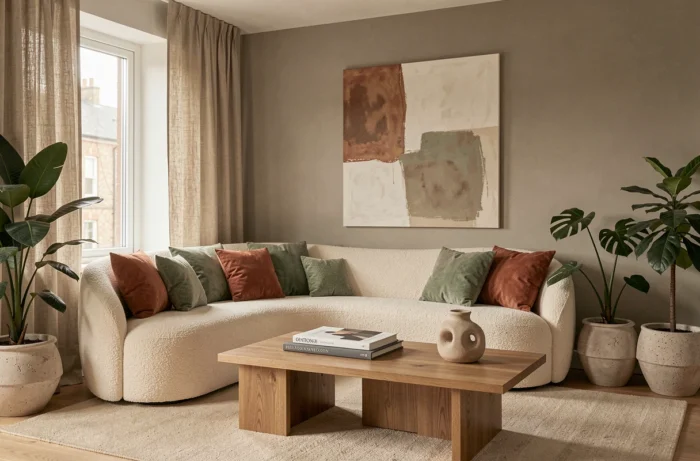
A corduroy sofa that clashes with the sideboard inherited from your grandparents, a terracotta accent wall to break up the monotony of white: refreshing your home in 2026 is less about major renovations than targeted choices in materials, colours and a few key pieces of furniture. Today’s interior design trends favour bold contrasts, reuse and a sensory approach to every room.
Saturated colour to define the space in a living room or kitchen
For a long time, colour was treated as a finishing touch—an accent on a cushion or vase. The emerging approach is to use colour to visually define different areas within the same space. A deep teal applied from floor to ceiling in a reading nook separates it from the rest of the living room without the need for a partition or glass screen.
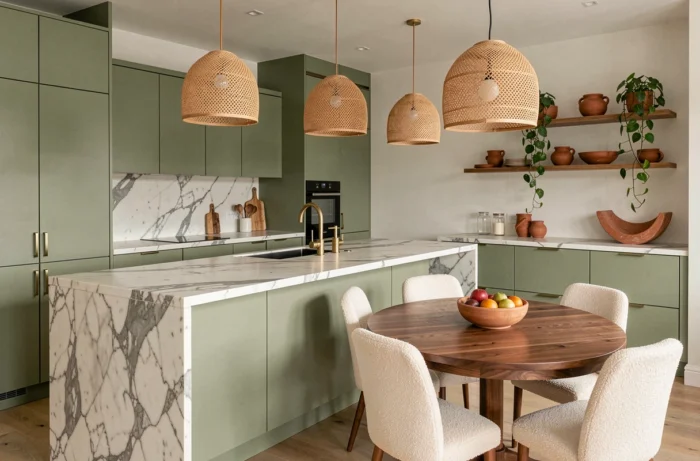
Paris Design Week showcased this approach, with saturated shades that change how a space is perceived. In an open-plan kitchen, painting the end of the countertop and the adjoining wall in the same warm shade (brick or burnt ochre) creates a visual block that anchors the dining area without closing off the space.
Following Callmespring’s trends and news throughout the seasons, it quickly becomes clear that palettes are shifting towards enveloping tones, far removed from the dominant grey of the previous decade. Forest green, plum and warm browns are making a comeback in mainstream paint collections.
One technical detail that is often overlooked: interior paints carry a volatile substance emissions label, rated from A+ to C. This label helps you compare products, although it does not, on its own, guarantee good indoor air quality. If you’re repainting an entire living room in a saturated shade—which means applying several coats—checking the rating before you buy can help avoid unpleasant surprises.
Artisanal textiles and velvet: materials that transform a room’s atmosphere
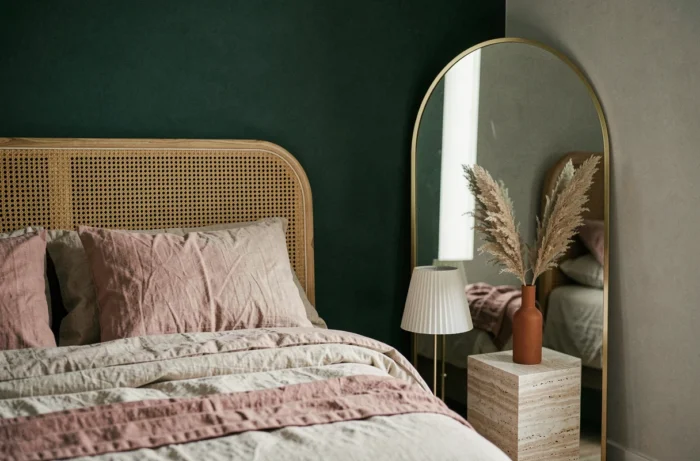
Replacing a throw, curtains or a rug can transform a room faster than a fresh coat of paint. The 2026 interior design trend puts artisanal textures centre stage: crinkled linen, bouclé wool and handwoven cotton. These textiles introduce subtle irregularities that add character to an otherwise very sleek interior.
Velvet, which some thought was on its way out, is making a comeback in collections of cushion covers, armchairs and even headboards. A corduroy armchair creates a focal point in a living room without the need to pile on accessories. It’s also available in a washed finish that’s less shiny and better suited to everyday life with children or pets.
Mixing textures without overdoing it
A common pitfall is layering materials without any clear hierarchy. A practical rule that works well: choose one dominant material (linen for the curtains and sofa, for example), one accent material (velvet for two cushions) and keep everything else neutral. A maximum of three textures per living area is enough to create depth.
- Linen or heavyweight cotton for large surfaces (curtains, sofa covers): they absorb light and soften the room’s acoustics.
- Bouclé wool or corduroy for occasional seating and cushions: their texture draws the eye and invites you to touch.
- Raw wood or matte ceramic for hard surfaces (coffee table, lamp): the contrast with textiles prevents an overly soft look.
Reuse and second-hand furniture: an aesthetic choice as well as an eco-friendly one
Buying a 1960s sideboard or salvaging antique cement tiles is no longer just an eco-conscious choice. Reuse has become an aesthetic statement that can shape an entire interior. A vintage find brings a patina and individuality that no catalogue can replicate.
The second-hand market for designer furniture has become much more established in recent years, with specialist platforms that let you filter by period, style or designer. You can now find 1970s Scandinavian chairs, Art Deco brass lamps and rattan chests of drawers at widely varying prices, depending on their condition and provenance.
The limitations of reusing materials in interior design
Reusing building materials (antique tiles, reclaimed parquet flooring, bricks) comes with constraints that Pinterest inspiration rarely mentions. A reused material does not necessarily have a valid declaration of performance for its new intended use. For decorative items such as a mirror or a piece of furniture, the risk is limited. For flooring or an element fixed to the building, it is advisable to have the product assessed and inform your insurer.
This should not put you off, but it does distinguish decorative reuse (simple and low-risk) from structural reuse (which requires a basic level of technical verification).
Designer furniture and sculptural pieces: where to focus your decorating budget
When your budget doesn’t stretch to a complete makeover, it’s better to invest in one standout piece than spread the cost across ten accessories. A curved armchair, a textured-glass coffee table or a sculptural light fixture can refresh the look of an entire living room.
Tinted glass with irregular, sculptural forms is making its mark in recent collections of lighting and coffee tables. It plays with natural light and makes a space feel visually lighter, making it particularly well suited to small rooms.
- A sculptural light fixture (pendant or table lamp) transforms a room’s atmosphere for a modest investment compared with a full-sized piece of furniture.
- A velvet or textured-fabric armchair replaces a basic chair and becomes the living room’s visual anchor.
- A large mirror, vintage or new, makes a space feel bigger and redistributes light without any renovation work.
Focusing your budget on one or two standout pieces lets you keep the rest understated. A room with a striking armchair and neutral walls has more personality than a space where every object is shouting about the latest trend. Today’s interior design trends reward restraint as much as boldness, as long as every choice is deliberate.