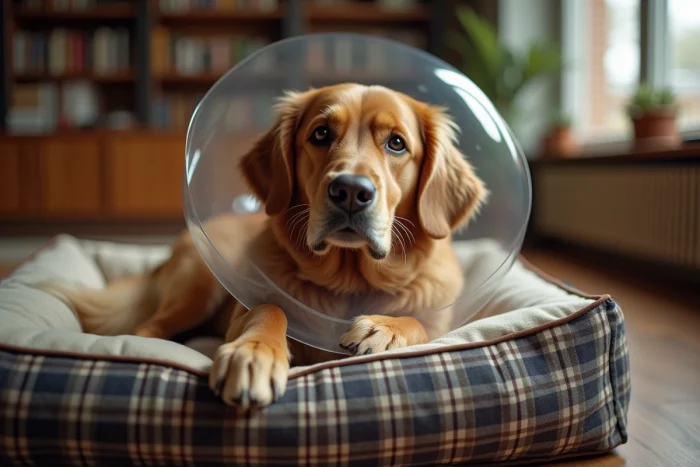
After an operation or skin treatment, the cone becomes the main barrier against compulsive licking. The problem arises as soon as the owner leaves the room: a dog wearing this rigid cone can get stuck, panic, or worsen its wound in an attempt to get rid of it. The question is not whether one can leave, but how to prepare the environment and the dog so that this absence goes smoothly.
Brachycephalic dogs and senior dogs: two often overlooked at-risk profiles
Not all dogs react the same way to the cone. Two categories of animals pose specific problems when left alone with this device.
Brachycephalic breeds (French bulldog, pug, Cavalier King Charles) already have compromised breathing at rest. A rigid cone, especially if it is slightly too tight or poorly positioned, can further reduce airflow around the flattened muzzle. In the absence of the owner, an episode of respiratory distress can go unnoticed for hours.
For senior dogs, veterinarians in canine geriatrics report that animals with cognitive dysfunction become more disoriented with a cone. Getting stuck in corners, falling down stairs, panic attacks: these incidents notably increase when the senior dog is left alone. The increase in canine life expectancy makes this scenario more common.
For these two profiles, the decision to leave a dog alone with a cone deserves a prior discussion with the treating veterinarian, who can suggest an alternative device or adjust the acceptable duration of absence.
Rigid, soft, or inflatable cone: the choice makes a difference when the dog is alone
The transparent plastic cone remains the most prescribed model. It effectively protects the operated area, but it also turns the dog into a domestic bulldozer: inaccessible food bowl, blocked doorways, repeatedly bumped furniture.

Alternative devices are gaining traction in veterinary recommendations, especially when the dog must stay alone for several hours. Recovery suits, soft cones, and inflatable models are associated with fewer collisions with furniture and less stress according to available clinical feedback.
The choice depends on the location of the wound:
- A recovery suit covers the torso and is suitable for abdominal sutures (spaying, digestive surgery), but does not protect the legs or head.
- An inflatable cone limits the range of motion of the neck without obstructing peripheral vision, which reduces blockages. It remains insufficient if the wound is on a front leg that the dog can reach by contorting.
- A soft fabric cone offers a compromise between protection and comfort, but a determined dog can crush it to reach the area to lick.
None of these devices replace supervision. However, a dog alone with a soft cone eats, drinks, and moves much more easily than with a rigid cone, which reduces sources of frustration during the absence.
Preparing the room before leaving: the practical checklist
The majority of incidents occur because the environment has not been adapted to the size of the dog wearing the cone. A few simple adjustments can significantly reduce risks.
Start by measuring the total span of the cone (including the head) and check that the dog can pass through every opening it will have access to without forcing. If a hallway or passage between two pieces of furniture is too narrow, block it off. A dog stuck between a wall and a piece of furniture can panic and injure its neck in an attempt to free itself.
Raise the water bowl so that it can drink despite the cone. A support at chest height, or simply a wider bowl placed on an overturned box, is sufficient in most cases. Test the setup before leaving: if the dog cannot drink in your presence, it won’t be able to do so alone.
Remove any objects on the floor that could get caught in the cone: cables, rope toys, fringed rugs. Block access to stairs. Falls on stairs are one of the leading causes of emergency returns to the veterinarian during the recovery period.
Duration of absence and remote monitoring
There is no universal maximum duration. A dog accustomed to being alone and wearing a soft cone for several days tolerates a few hours of absence better than an animal recently operated on discovering the rigid cone for the first time.
A connected surveillance camera allows you to check remotely that the dog has not gotten stuck, has access to water, and is not showing signs of distress. This is not a gadget: detecting a problem remotely prevents complications in healing.
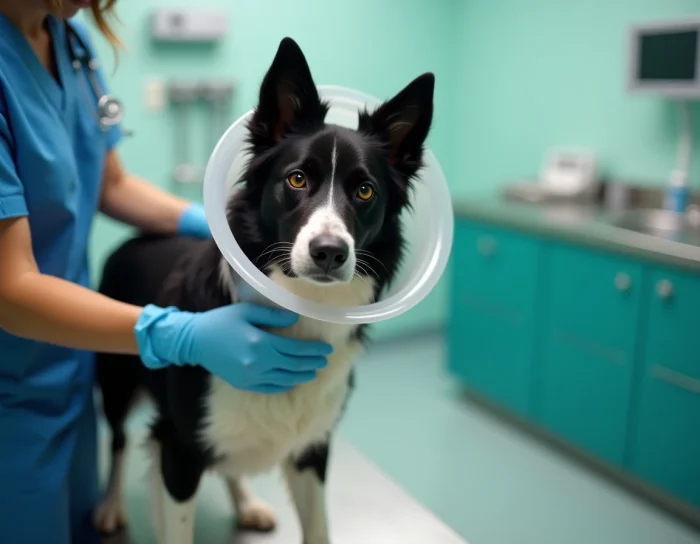
Wearing the cone: why removing it “just for a few hours” is problematic
The temptation to remove the cone before leaving is strong, thinking that the dog will be more comfortable. Veterinarians strongly advise against it. A few minutes of licking is enough to reopen a healing wound or to ingest a topical treatment applied to the skin.
Wearing the cone is an integral part of the treatment, just like the prescribed medications. Interrupting it, even briefly, can prolong the total recovery time and lead to infectious complications.
If the dog categorically refuses the cone and you must leave, contact your veterinarian to discuss an alternative suitable for the location of the wound. Removing the cone without veterinary advice remains the main mistake made by owners during the post-operative period.
Managing a dog alone with a cone relies on three pillars: a device suitable for the animal’s profile, a secure environment, and a reasonable duration of absence in the first few days. Ensure that the dog eats, drinks, and moves properly with its cone in your presence before leaving it alone for the first time.