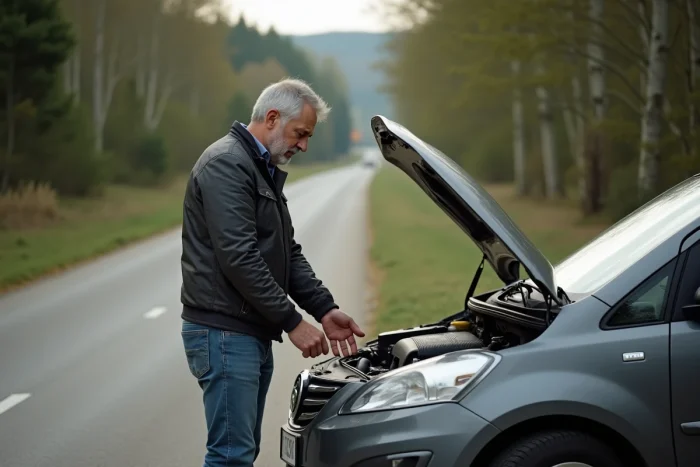
A four-cylinder engine that only delivers power from three is a quarter of power that evaporates and internal components trapped in a permanent overload. This scenario is far from rare: it most often results from an ignition failure, a temperamental injector, or a loss of compression that wears down the mechanics over the kilometers. The result: the mechanics suffer, and wear quickly gains ground.
The damage does not stop at a simple loss of dynamism. As soon as a cylinder fails, consumption skyrockets, pollutant emissions follow suit, and the repair bill can hit the driver hard at the slightest negligence. Allowing this imbalance to linger not only jeopardizes the engine’s reliability: it opens the door to worse and turns an isolated issue into widespread breakdown.
Why does an engine run on three cylinders: causes and warning signs
At the garage, the verdict comes quickly. An engine that is supposed to operate on four strokes but only keeps rhythm with three signals an unforgiving defect. Very often, the explanation lies on the ignition side: a clogged spark plug, a severed cable, or a faulty coil. The slightest grain of sand is enough to disrupt combustion, especially in a gasoline engine, where the absence of a spark leaves the driver deprived of a good portion of power at the slightest demand.
This picture would not be complete without mentioning other culprits. A timing belt that derails or desynchronizes can disrupt the meeting between pistons and valves. Clogged injectors leave a cylinder orphaned of fuel, causing the engine to strain on its three remaining legs.
Some unmistakable warning signals include: unusual vibrations, jerky idling, increased consumption, difficult starts, or a persistent smell of gasoline. Is the check engine light on? In most cases, an electronic diagnostic will clarify the situation.
For those who wish to delve deeper into the matter, driving a car on 3 cylinders is not a mere trivial failure. It often involves a succession of causes, and ignoring their signals exposes one to a chain of breakdowns and cascading bills.
What dangers does the car and its occupants face if we continue to drive in this state?
Continuing to drive while one cylinder is down is akin to provoking the mechanics. Every movement weighs heavily on the balance of reliability and safety. Wear accelerates, and every part is at risk of breaking.
Here are the failures that frequently occur in this context:
- Excessive oil consumption
- Decrease in compression
- Possible appearance of engine oil leaks
The engine is not the only one to pay the high price: fuel consumption soars, a direct consequence of incomplete combustion. The exhaust can no longer process the excess pollutants, putting the catalyst at risk, leading to a hefty bill for any intervention. And if the owner delays addressing the issue, the cost increases with every kilometer, up to the possibility of having to replace the cylinder head, the catalyst, or even the entire engine block.
Wear also affects road behavior. Vibrations spread to the very structure of the vehicle. On the road, this translates to a loss of stability, less precise steering, longer braking distances, and significantly degraded comfort. In an emergency maneuver, the lack of power can lead to very unpleasant surprises.
For those who want to keep their car reliable, it is useful to monitor several indicators:
- Defective mechanical condition: rapid wear of related parts
- Increased pollution level: high emissions, direct impact on the environment
- Deteriorated driving experience: reduced safety, diminished comfort for all occupants
No matter the type of journey, ignoring these alerts exposes one to long-term repairs and a major risk behind the wheel. Sooner or later, driving on three cylinders means letting the mechanics slide into irreparability.

Repairing an engine that runs on three cylinders: what to do and at what cost?
At the first alert, action must be taken without delay. Start by identifying the faulty part: test the ignition, check the condition of the spark plugs, coil, wires, and air filter. Often, a simple replacement or cleaning allows a return to normal if the issue is addressed in time. The quicker the intervention, the less it costs the mechanics and the wallet.
In most cases, replacing the spark plugs or the coil is enough to resolve the breakdown. One can expect to pay between €60 and €200 for the spark plugs (including labor). If the coil is the culprit, the expense ranges from €80 to €300, depending on the brand and engine. Replacing the air filter and adhering to oil change intervals also contribute to the overall health of the engine.
The bill increases if the problem comes from the timing belt or injectors, as some Stellantis engines or other brands are particularly sensitive. For such interventions, it is not uncommon to exceed €800, especially for a complete injector or timing belt change. Investing in compliant parts and keeping an eye out for used offers can help lighten the bill.
To visualize the price ranges according to the cause of the breakdown, here are the main benchmarks to remember:
- Electronic diagnostic: minimum €40
- Replacement of spark plugs (parts and labor): between €60 and €200
- Coil replacement: €80 to €300
- Heavy repair (injectors, timing belt): €400 to €1,000 depending on the extent
One rule prevails: it’s better to have flawless maintenance than to have to replace the entire engine. Monitoring oil levels, keeping the air filter clean, and performing all scheduled maintenance can prevent a simple issue from turning into an irreversible breakdown. A well-maintained engine means a road without threats and journeys that never end up on a tow truck.