Traveling in style is not just about filling a suitcase with photogenic clothes. It’s a trade-off between weight, versatility of pieces, and adaptation to the climatic conditions of each destination. Traveling with style means understanding a few textile and logistical principles before packing your bag.
Technical fabrics and comfort in transit: what the fabric changes
Most travel fashion guides focus on colors or trends. The real lever is the choice of materials. A fabric that dries slowly, wrinkles at the slightest crease, or retains odors compromises any outfit by the second day.
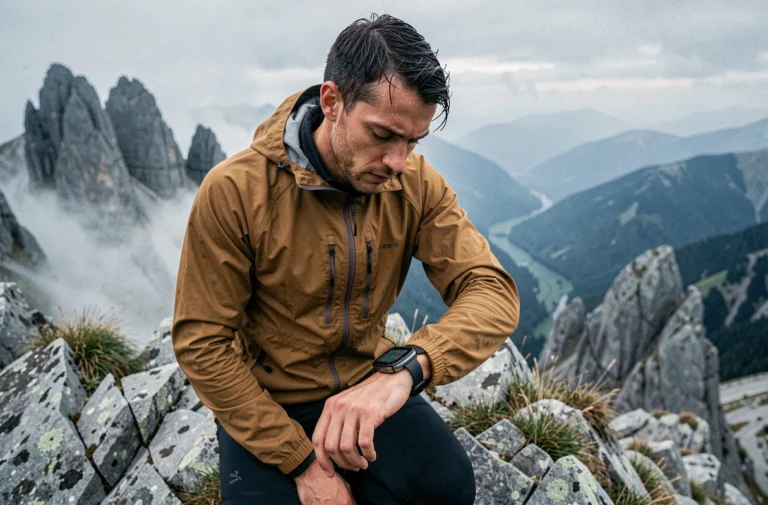
Merino fibers offer natural thermal regulation and odor resistance for several days. This fine wool can be worn both under a blazer and as a base layer during a trek.
Recycled polyamide and polyester, often used in travel pants, allow for quick drying after a downpour or a hand wash in a hotel sink. A well-cut technical fabric pant transitions effortlessly from an urban hike to dinner, while jeans take hours to dry and weigh heavily in the bag.
Specialized resources like globe-modeuse.com detail these trade-offs between materials, cuts, and destinations for female travelers who want to combine comfort and style.
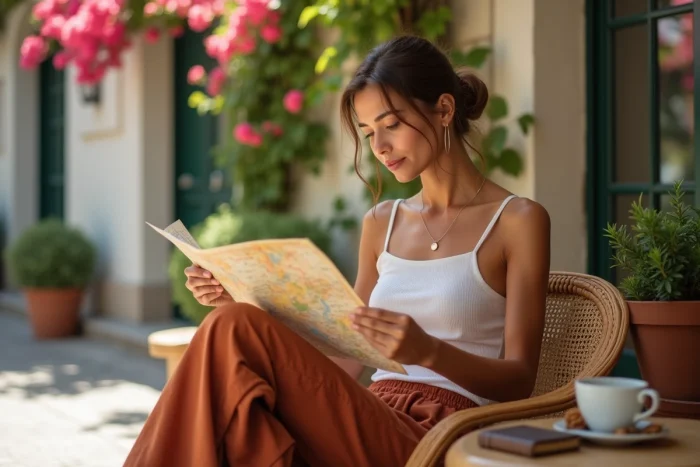
Capsule wardrobe for traveling light without sacrificing style
The concept of a travel capsule wardrobe is based on a core of pieces that all combine with each other. The goal is to multiply possible outfits with a minimum number of items in the bag.
The basics of an effective capsule
- Two versatile bottoms (a dark technical fabric pant, a skirt or shorts depending on the destination) that match all tops
- Three tops in a compatible color palette, including at least one long-sleeved for cool evenings or places of worship
- An intermediate layer (light jacket, jersey blazer, or compact cardigan) that structures a silhouette without adding weight to the luggage
- A comfortable pair of closed shoes for walking and a pair of flat sandals for warm days
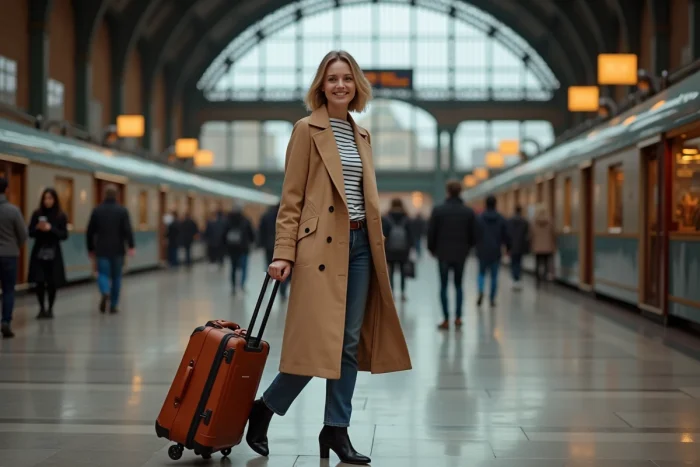
With these pieces, about ten different combinations become possible. The secret lies in the coherence of the palette: neutral shades (black, navy, beige, khaki) enhanced by a colorful accessory are enough to vary the looks.
The bag as a centerpiece
A structured backpack replaces the hard suitcase for travelers who are constantly on the move. Models with full suitcase-style openings make accessing belongings easier without having to take everything out. Opt for a separate compartment for shoes and a removable pouch that serves as a handbag during the day.
Multifunctional accessories that change a travel outfit
A wide scarf serves as a blanket on the plane, a sarong at the beach, sun protection, and an accessory that transforms a basic t-shirt into a polished outfit. It’s the piece with the best ratio of bulk to utility.
Discreet and lightweight jewelry allows for a transition from a casual to a more dressed-up look. A pair of gold earrings and a thin bracelet are sufficient. Avoid bulky pieces that can tangle in the bag and risk breaking.
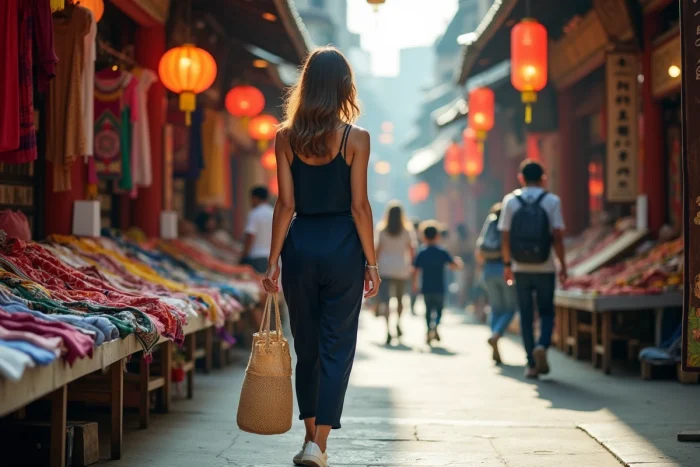
Sunglasses structure a face and provide immediate style, even with a minimalist outfit. Choose a frame that fits in a compact hard case to avoid scratches.
Adapting your style to the dress codes of each destination
Traveling in style does not mean imposing your usual wardrobe everywhere. Some destinations require adjustments that, if well thought out, enrich the look instead of constraining it.
In countries where shoulders and knees must be covered to access religious sites, a loose scarf and a midi skirt become dual-purpose pieces. They respect local codes while serving as evening wear.
Tropical climates require breathable materials and light colors that limit heat absorption. Linen, despite its tendency to wrinkle, remains the most pleasant fiber in high humidity. Some brands now offer linen-polyester blends that reduce creasing while maintaining breathability.
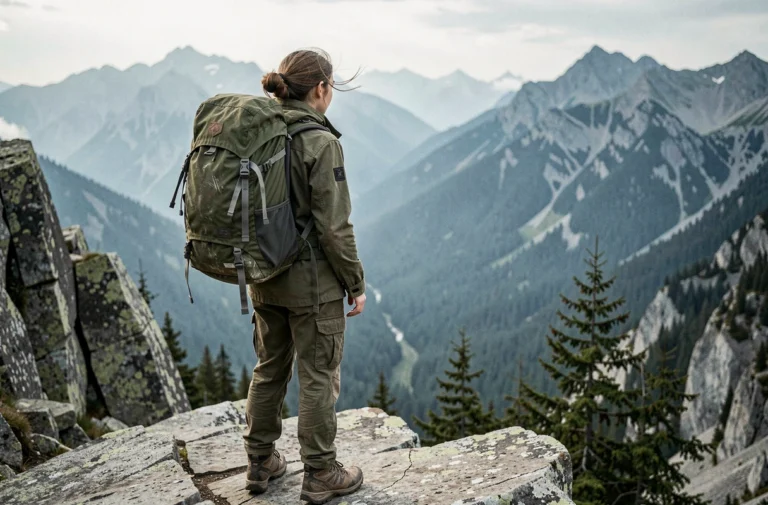
For cold destinations, the layering system takes precedence over a single thick coat. Three thin, technical layers offer more flexibility than one bulky sweater and allow for adaptation to temperature variations between the outdoors and heated interiors.
Quick care for clothes while traveling
Maintaining a polished appearance over the days also involves simple care gestures. A compact Marseille soap washes most textiles without damaging them. Two stain removal wipes slipped into the toiletry bag can save an outfit the same evening.
Hanging clothes in the bathroom during a hot shower relaxes the fibers and removes some of the wrinkles, without an iron. This technique works particularly well on polyester and synthetic blends.
Rolling clothes instead of the classic folding limits crease marks and optimizes space in the bag. The most delicate pieces are placed in the center, surrounded by sturdier layers.
Travel style relies less on the quantity of clothes packed than on the coherence of choices. A few well-coordinated technical pieces, one or two versatile accessories, and attention to materials allow you to cross multiple time zones without ever looking like you’ve slept in an airport.