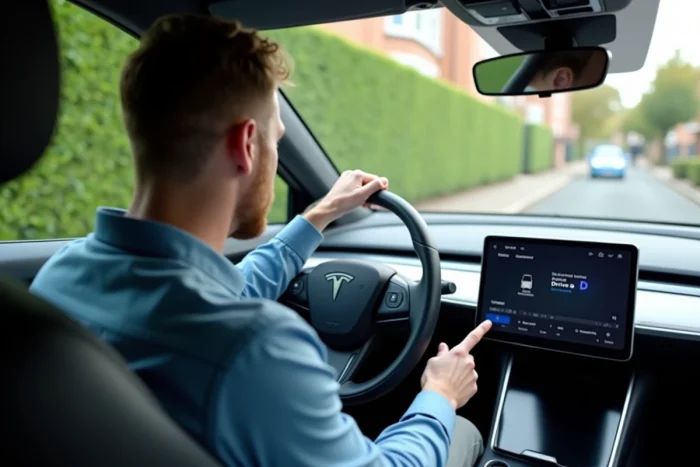
A simple movement of the lever radically transforms the driving of an electric car. One click and everything changes: the management of energy recovery during braking, the responsiveness of the pedal, and even driving habits. From one manufacturer to another, the settings vary, just like the names of the modes. On some electric or hybrid models, only one mode is available, with no alternative.
Activating mode B or D is not just a matter of preference: this choice alters the sensation under the right foot, the amount of energy recovered with each slowdown, and affects daily consumption. Depending on the route or type of road, choosing one mode or the other reshapes comfort, range, and even brake wear.
Mode D or mode B: what are the concrete differences when driving an electric car?
The distinction between mode D and mode B is not limited to a subtlety of ergonomics. In mode D, for “Drive”, the electric car behaves almost like a conventional automatic: when you release the accelerator, the deceleration remains moderate. The engine brake is discreet, and the energy recovery during braking remains contained. This mode is particularly suited for highway or fast road driving, where the driving must remain smooth and steady.
In mode B, for “Brake”, the game changes. As soon as you lift your foot, regeneration comes into play: the car slows down significantly, sometimes to a complete stop without even touching the brake pedal. The kinetic energy recovered during deceleration is then maximized, immediately stored in the battery. This operation proves valuable in the city, downhill, or in traffic jams, where repeated stops engage the system and save on brake wear.
In practice, each manufacturer offers its own interpretation: some display the recovery power on the dashboard, while others provide precise adjustments via the gear selector or paddles on the steering wheel. This choice, at the heart of driving in mode B or D in an electric car, requires real adaptation. Switching from one mode to the other directly impacts consumption, range, and the driving experience. This is where electric mobility reveals all its richness: each trip becomes a testing ground, an opportunity to optimize driving.
Advantages and limitations of each mode according to daily usage
Travel habits naturally dictate the most suitable mode. Mode D is essential for long journeys, highways, or main roads, where speed remains stable and deceleration is rare. Here, energy consumption stabilizes, and range is preserved, as the engine brake intervenes little and energy recovery during braking remains marginal.
In the city, the equation changes. Mode B takes the lead. With each slowdown, energy recovery intensifies. Stop-and-go, traffic jams, red lights… All these moments become opportunities to recharge the battery and spare the brake pads. This operation appeals to eco-driving enthusiasts who wish to maximize their range while minimizing maintenance.
Here is a summary table to compare modes D and B according to usage:
| Usage | Mode D (Drive) | Mode B (Brake) |
|---|---|---|
| Highway / Long journeys | Preserved range, smooth driving | Limited recovery |
| City / Short trips | Less recovery | Increased energy recovery, less brake wear |
However, mode B has its own requirements. The more pronounced deceleration sometimes surprises drivers who are not used to it, who must learn to precisely modulate the accelerator. In contrast, mode D reassures with its gradualness on open roads or when starting with electric driving. Depending on the context, alternating between these two modes allows for refining energy optimization, an asset for getting the most out of your vehicle on a daily basis.
How to choose the mode suited to your trips and driving style?
Determining the ideal driving mode in an electric car involves making choices based on the nature of the journey, personal preferences, and eco-driving goals. Mode D, close to the behavior of a thermal car, offers gentle deceleration, smooth transitions, and limits the intervention of the engine brake. Perfect on fast roads, it prioritizes comfort and allows for “pulse and glide” driving: alternating accelerations and coasting phases to limit consumption over long distances.
Mode B, activated via the gear selector or sometimes the paddles on the steering wheel, transforms urban routines. A simple release of the pedal is enough to initiate generous deceleration, which recharges the battery and preserves the brakes. This mode appeals to drivers who enjoy one-pedal driving and want to make the most of regeneration during successive stops.
Stay attentive to the indications on the dashboard: most models display an estimate of energy recovered and instantaneous consumption. Adjust the mode according to the terrain, traffic, and your sensitivity to deceleration. Innovations continue in this area: some manufacturers, like Michelin, are developing new solutions to further reduce brake wear and support these driving evolutions.
Over time, alternating between mode B and D becomes almost instinctive. The road, the city, the weather: each variable influences the choice. It is these subtle adjustments, day by day, that make electric driving as lively as it is efficient. And tomorrow, who knows how far these driving modes will take us?